
Your Faith Questions Answered

We all have that one question about God, the Bible, or Christianity. You know the one. It has either stumped you or challenged you for a while, but you are not quite sure where to ask it, or who will give you a serious, thoughtful answer. So, you wait.
Over the past several years, I have gotten the reputation as the minister who enjoys difficult questions and spiritual conundrums (and it's true!). In fact, many of my own questions were what inspired my book Taboo: The Questions You Aren't Supposed to Ask. This has translated into me being stopped by friends, church members, and complete strangers in coffee shops and bookstores with a question they have been dying to ask.
From the bit of parchment discovered a while ago that was claimed to indicate that Jesus was married to more classic questions about why bad things happen, I get the privilege of answering these questions just about anywhere and everywhere.
Which brings me to this post and that question you have always wondered. This question has sat for too long in the back of your mind waiting to be asked. Maybe there hasn't been the right time or the right person, or maybe, like many people, you were taught the bad theology that to ask such questions was to be unfaithful.
It's time to let go of whatever has held you back and ask your question. I am going to take the questions submitted here and use them as topics for posts in the future on this and other sites. If you would like me to email you the link to the response when it is posted, you can include your email (though it is not required...you are welcome to remain anonymous).
I encourage you to share this post with your friends and family as well. Offer them the opportunity to ask their questions about faith and have them answered with the legitimacy they deserve rather than being dismissed. I look forward to your questions!
A Simple Way to Connect with Ancient Christianity

We have an ancient, mystical faith with brilliant minds and voices that have thought and written throughout the past 2,000 years. But, how can you connect with them? Where do you go to explore these words without enrolling in seminary? You begin with something simple: the Apostle’s creed as a doorway into the early church thinkers and writers.
It is one of the most ancient pieces of our faith and is recited by millions every Sunday. Its concise statement of the core beliefs of Christianity are both profound and easily understood. It is a work that, when studied properly in its historic context, can guide us to Jesus through beautiful voices from our rich past.
That is why I got involved with a resource centered around this most important document. It is called “Creed” and centers around a brilliant devotional exploration written by a friend of mine named J.D. Walt. Each devotion combines the text and themes from the creed with quotes from ancient Christians and offers ways for us to experience them all in our daily lives.
While experiencing this as an individual is great, it is taken to the next level when the journey is shared with others. That's where I came in. I have written a small group curriculum for churches to use to help people journey together through the creed. It is available as part of the Creed Experience that includes videos, audio, curriculum for kids, sermons and all you need to unite your whole church in this study.
For groups, each week spends time studying and discussing the scripture behind that week’s portion of the creed, talks about the week's devotions and closes with a guide to pray through the theology presented in the creed as a group.
I truly hope your imagination is captured by this link to our ancient faith and would love to hear your stories of how it has impacted your church. I hope you’ll make the “Creed Experience” the next study in your group.
Question for the Comments: How has the Apostle's Creed been part of your faith?
How You Can Hear God's Voice (again)

"Why isn't God speaking to me?" I was venting to a friend of mine a couple of years ago about how everything felt silent on the God front. He was kind, and offered the best answer he had. He said he wasn't sure I was right. He wasn't sure God ever stopped talking to me.
In the moment it was not the kind of advice I was wanting. I was looking for a technique or some trick to have an ecstatic experience that would spark the divine inspiration. I didn't want to hear the simple, profound truth God hid in the words of my friend. God was speaking to me. God is speaking to me, but that's not it.
God is speaking to you too. One way or another, God is speaking. If nothing else, God is using creation to call out to you. The problem is not God's voice, it's our ears. While we are sitting around waiting to pass by a burning bush that is not being consumed, God is trying to talk to us through the unwashed dishes in our sink and the dew on the ground in the morning.
How do you hear it? It begins by practicing being aware of the presence of God. God is always present, and keeping that reality in the front of our mind is the beginning of being able to listen. That's the next step: listen.
By "listen" I mean, with an awareness that you are a spiritual being and God is present, consider your world. Think about your surroundings. Listen to the music. Watch the movie, and notice where the spiritual intersects with your life.
Sometimes its a lyric that describes how you see God. Sometimes its two paths diverging in the woods that reminds you of a brilliant poem, your high school english teacher and how much you love being in nature.
If you can listen, if you can let go of the idea that the voice of God has to happen in some heightened emotional state and be more aware of God's presence, I bet you will discover that God has been speaking to you more than you thought.
Question for the Comments: Where is it easiest for you to hear God?
Where Have All the Introverts Gone?

“You need to be a leader not a follower” “It requires you to take a leap of faith” “God wants you to live life out loud for Jesus”
Though Americans are about a 50/50 split introverts vs. extroverts, we lift up extroversion as if this personality trait is somehow better or holier than the others. Whether it is extolling the inherent virtues of extroversion in statements like the ones above or designing programs that echo the truth behind them, we are profoundly biased towards the traits of the extroverts.
For those who can’t quite recall the differences between the two, let me give you some bullet points to refresh:
Introverts:
- energized by being alone
- private
- quiet
- contemplative
- independent
- deliberate
- prefer few, close friends
Extroverts:
- energized by interaction
- social, public
- loud, talkative
- quick-minded
- group-oriented
- distractible
- Prefer many friends
A major problem with meshing our culture's preference for the extrovert with our faith is that when you consider the Biblical characters in terms of those lists you can easily pull out many major players who exhibit far more introverted tendencies than extroverted ones.
For example, many would say Moses was an introvert. Think about it, would an extrovert ever stare at the burning bush to notice that it was not being consumed by the fire, or just find more dry stuff to throw on top of it for a bon fire?
That tells us that we need to be careful about how we speak, what we value and who we try to reach with our programs because we desperately need the Moseses of our world in the church, and if we aren’t careful we may unintentionally marginalize, ignore, or exclude the quiet leaders in our midst.
What do you need to do? To borrow an introverted trait, you need to carefully evaluate your programs, messages, and relationships. You need to take a moment and think about the messages you are sending.
I offer these questions and observations to help your ministry think through how introvert-friendly you are.
1. Programs:
What programs do you offer that encourage participants to spend time alone in quiet contemplation?
Look at your most high-energy, loud program. How can you build in times of quiet to give introverts a place to breathe?
How can you remove or alter moments where people are encouraged to have surface-level interaction with people who they aren’t close to so that introverted people feel comfortable not participating or only speaking with people they are already in a relationship with?
2. Illustrations
Do you assume everyone should be more extroverted? For example, do you use the illustration of the a person eating alone assuming that no one would want to be alone?
Do you constantly reference action-movies or extreme stories of people taking “leaps of faith” without thinking things through?
Do you highlight examples of thoughtful, slow, intellectual people who make a difference?
3. Bible
Do you recast every positive character in the Bible as a “visionary leader” or a group-oriented person?
Do you offer people time to sit in real quiet (without background music) and consider the scriptures?
Do you highlight moments in the Bible where introverts make an impact or someone makes a habit of doing something introverts relish (like Jesus getting away by himself to pray)?
4. Your relationships
Do you bounce around the entire room every time you are there only making surface connections?
Do you try and get introverted people to talk to a bunch of people instead of getting to know them in an extended conversation?
Do you feel and act awkward when someone takes time to answer your questions? Do you fidget and leave those conversations rather than slowing down to engage?
How did you do? How would you grade the friendliness of your ministry to introverts? If you aren’t where you need to be, take some time to find those in your community who are more on the introverted end of the scale (maybe that is you) and get their input. Let go of the feeling that everything has to be big and loud in order to connect with teens and design some opportunities for the introverts to be catered to and the extroverts to be stretched.
3 Questions to Un-Boring the Bible

Confusing. Hard to read. Boring. Those are some of the reasons that people give (or think) as for why they do not read the Bible, and it is really true sometimes! It can be difficult and down right obtuse (though not as obtuse as using “obtuse” when you mean “hard to understand”!).
I find that sticking with a passage for a moment after I read it by asking a couple of questions is a huge help. Here are three of my go-to questions:
1. How would I say this in my own words?
This may be the thing I do most often. As simple as it sounds, there is something powerfully revelatory about restating the Biblical text you just finished reading from your own memory. Not only does it help me retain it throughout the day, but I end up having to clarify the meaning when I think “I would never use the term “revelatory”… what is a normal word for what is meant there?”
2. How is this similar to a moment in my life?
I am always trying to challenge myself to try and experience the scripture as if I were there. I want to try and read between the lines and understand the emotions that may not be said but shown. This question is a HUGE help in that area. If I can make a connection to a similar moment or story in my own life, it is like someone cleaned a bunch of mud off the window through which I was seeing the Bible. All of a sudden I can feel what the characters are feeling and understand their responses and actions much better!
3. Is this a good or bad thing?
Though it can feel uncomfortable at first, figuring out whether or not you agree with what is said or done can be a huge breakthrough. I find that sometimes when I am having a hard time reading a passage, it is not because of the passage itself. The reason for my frustration is because I don’t agree and am trying to force myself to agree because it’s the Bible.
Not every action in the Bible (even by the good guys) is meant to be emulated, nor is every premise meant to be applied in the 2000s. So, decide where you think this is a good or bad thing. Then, ask why. Where is the rub? Finally, if you are bothered by your disagreement, call someone you respect and talk about it. You’ll probably both grow closer to God because of it.
For the Comments: What questions do you use?
>>>Read More: Looking for All the Wrong Things in the Bible
The Temple: Location Means Everything

Location is important. Imagine the scene: Brianna opens the door and says, “What do you think?” to Paul sitting across the room. The meaning is unclear. Why? Because the location of those people changes what these words mean.
If Brianna is opening the door to the conference room at work, she is likely asking input on a project. If on the other hand, she is opening the door to the bedroom from her walk-in closet before they leave on a date, she is asking a hundred things and confessing about twenty while making at least one warning shot over the bow.
The Bible is exactly the same way. Where Jesus is when he is teaching as well as when he is there has dramatic implications on the meaning of his words. No place has as much potency of meaning as the Temple, and a whole lot of Jesus’ teachings happen within its incredibly symbolic walls.
When he says “I am the light of the world” he is standing in the temple which had as its nickname “The Light of the World.” All of a sudden those words take on a depth and significance that we miss when we don’t pay attention to their location and understand how that location alters and extends the meaning of the words that are being spoken.
Because of the importance of location and the unique ways in which the life and teachings of Jesus are meshed with the place in which he worshipped (the Temple), I believe it is important for us to dive into its study. We will be looking at that for the next four weeks at our evening worship and will be making them all available on the podcast about a week later.
Your Cliff's Notes to Seminary
I have been in seminary for the past 1,000 years and am nearing the end. Along the way I have had the opportunity to read a lot of books about faith and interpreting scripture. While MANY of the books are not readable because of their use of Academish in place of English, there have been several that I have loved and would love anyone I know to read for themselves. Here is a round of recommendations from my millennium in seminary.

The Epic of Eden by Sandra Richter: By far, hands down, the most formative, interesting, and exciting class I had in seminary was Old Testament with Sandra Richter. I do not think that there has been a single month that I have not referred to the material from that class since I took it 900 years ago.
A couple years ago I was looking for a resource to teach about the Old Testament when I discovered that the class had been written in book form by this brilliant professor. Not only that, she writes like a normal human being rather than a professor. If there is any book you ever decide to read on the Old Testament besides the Bible itself, this should be the one. Period. Actually, stop reading this and buy the book now.

Hearing the New Testament by Joel Green: There is more than one method for interpreting the Bible. In fact, this book explores seventeen! While some of the chapters are a bit heavy and some outright weird, the way this book opens up your eyes to the many perspectives from which you can view the scriptures is uniquely powerful and exciting.
Since each chapter is a different method (and each only 20 pages or so), grab the book, open to a chapter, and if you don’t like it or don't connect to it, skip to another chapter. Seriously. This is a fun book because of its broad palette.

Theology in the Context of World Christianity by Timothy Tennent: Is the God of Muhammed the Father of Jesus? Is Salvation through faith unique to Christianity? What changes about how we see human identity in the shame-based cultures of the East?
Christianity is a global faith. However, as American Christians we often get our cultural values confused with our Theology. This book not only helps us dissect our culture and theology, but it helps us understand the movement of God as it is spreading through the world. It is brilliant, orthodox, and accessibly written. Also, it is written by the President of the seminary from which I will graduate.

New International Commentary on the New Testament: If there is one thing I learned in Seminary it is that the Bible has so much depth and so many layers that I will never exhaust it. Moreover, I do not have the time or attention span to become fluent in ancient languages and read cultural documents to be a scholar who makes original discoveries. I need the strong shoulders of the brilliant scholars to stand on so that I can explore the depths of scripture.
This set of books is the most accessible scholarly commentary series I have discovered. The authors do their best to put detailed, profound information in language most people can understand. If you ever want to go in-depth with a book of the Bible, you can purchase the physical or ebook version of that Biblical book’s commentary. You’re welcome in advance. I particularly have enjoyed the commentary on the Gospel of Luke.
Jesus Wept

I know we are supposed to be all about joy, but the problem is, life isn’t always that great. We are dealt hard blows at difficult times and spend years recovering. In those difficult times, those times when the world seems to be against us and we are grieving some important loss, I have one question: How does God respond?
I think that we see his response in the shortest verse of the Bible in John 11:35: “Jesus Wept.” Besides being an easy way to get a piece of candy for memorizing a Bible verse in Sunday School, this verse reveals some of the most profound truth about how God acts in our world.
To understand that verse, we have to understand the story that sets it up. Jesus is in another town a couple days journey away from his friend Lazarus’ hometown when Jesus gets the news that Lazarus is dangerously sick. Jesus’ response is one of gladness because he says that this will be something that God will use to increase the faith of the disciples which is kind of weird, but he’s God so… we’ll give him a quirky creator pass.
Let me say that it seems clear at this point that Jesus knows how this story is going to end, but I won’t spoil it for you. After being glad at this sad news, Jesus waits a couple days before leaving and makes sure his disciples know that Lazarus is dead before they leave even though no one has come to tell Jesus this fact.
When they arrive, Jesus is scolded by Martha (which the Bible seems to indicate is a regular occurrence) for missing his opportunity to heal her brother. Then Mary comes and breaks down at his feet. She is joined by several other people who are grieving and Jesus is moved. In fact a couple verses before the shortest verse in the Bible it says, “When Jesus saw her weeping, and the Jews who had come along with her also weeping, he was deeply moved in spirit and troubled.” (11:33)
Then, troubled by their grief, Jesus weeps. Like I said before, it seems clear from the beginning that Jesus knows he is going to wait, Lazarus is going to die, and Jesus is going to raise him from the dead and cause everyone’s faith to deepen. That means that Jesus is not grieving the loss of his friend. He is not weeping because he misses the one he loved. Jesus is weeping with Mary and her friends.
That is powerful. In moments of grief, Jesus doesn’t tell us to suck it up or get control over ourselves. In moments of grief, Jesus does not demand joy. Jesus weeps with us. But he doesn’t leave us to wallow in our grief. If we are willing, if we can come to the place where we are open, Jesus will help us begin the supernatural process of healing.
I used to think that healing from loss meant it not hurting anymore or somehow getting over it, but I have learned that is not the case. Some things just hurt. They always hurt, and they always will hurt. But, sometimes in our cocoon of grief Jesus begins the metamorphosis of that pain.
He will begin to make that pain become something that gives to us rather than taking from us. Instead of causing us to break down, it will cause us to remember all of the wonderful gifts that whatever is causing the pain brought. It will enrich our lives by allowing us to remember, and in that memory we are nourished through what is still painful.
I don’t know if you are grieving right now or are on the mending side of grief, but know that if you weep, Jesus weeps with you. He does not demand you stop or ask you to feign joy, but offers to begin the (sometimes long) process of healing.
Which Magic Words Get me Into Heaven?
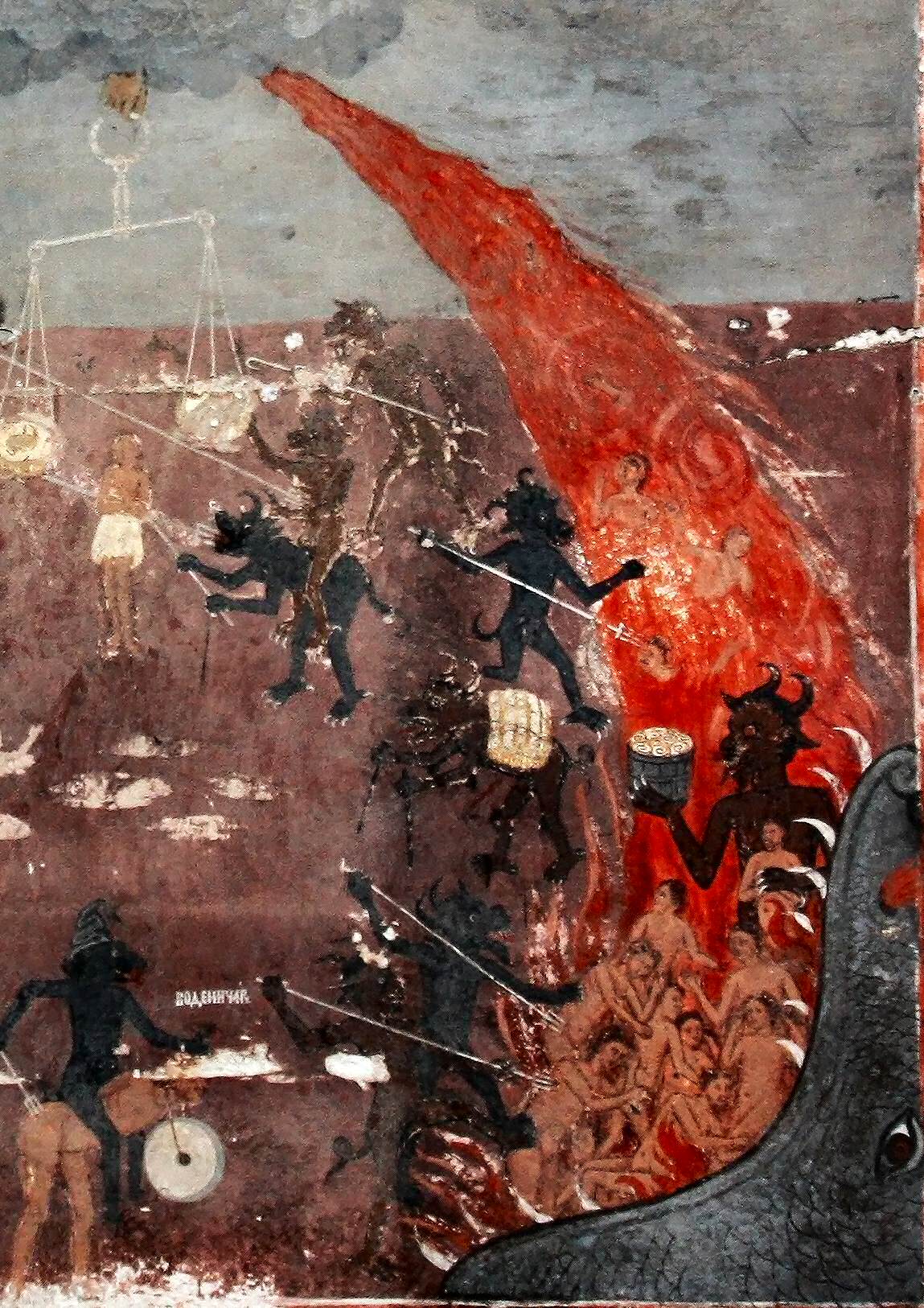
“Dude, you have to come to this play my church is doing. Everyone is getting saved there!” I can still remember the fervor in my friend’s voice as he invited me to go with him after youth group to a play about heaven and hell. Ok, it was mostly about hell, but heaven was in there at the end.
The Basic plot of the show was a series of sin depictions that began with the stereotypical sex and drugs and then got less and less severe ending with people telling white lies.
Each scene began with sin, then showed demons tearing at the person growling instructions to them. At some point each of the persons died and were transported to the gates of heaven where they were told they could not enter and were dragged away to hell erupting with the most horrifying screams my teen ears had ever heard.
It all ended with a person witnessing to one of the sinners. After hearing about hell and heaven, the sinner prayed the sinner’s prayer, died, and was accepted into heaven.
I will be honest, this show was worse than any horror movie I had seen to that point, the lighting, screams, and growling-special-effects voice of Satan made my heart stop. When the altar call was given, you better believe I ran down with everyone else and got saved again just to make sure.
The real problem that I have with these kinds of shows is not the fact that they talk about heaven and hell, but that they take such a low view of salvation and the teachings of Jesus. Instead of lifting Jesus up and calling everyone in the room to follow him, they boil it down to a set of magic words that we can say to get into heaven. That makes those who are skeptical about Christianity think we’re a bunch of slimy tricksters playing on people’s fears without offering anything of substance.
Which is, of course, exactly what Jesus said would happen. In the Sermon on the Mount he talks about people who use his name and even perform miracles, but are really wolves in sheep’s clothing. Rather than calling people to live out the teachings of Jesus, they offer them a cheap version that does not bear fruit in their life, and ultimately does not grant them entrance into heaven.
Salvation is bigger than some trick phrase (like Lord, Lord), and Wesley was careful to offer a different perspective on salvation. He understood salvation as a “way” rather than a moment or a decision. Don’t get me wrong, Wesley was all about getting more people into heaven, but he saw that as the same thing as getting people to follow Jesus now. Doing that required much more than a thirty minute play and a thirty-second prayer.
When Wesley preached, his altar call was much more likely to be about getting involved in small groups that were struggling to do good, stop doing bad, and connecting with God. Research done by Thomas Albin suggests that many more conversions (75%) happened in these groups than in the preaching time, and that often these conversions would require more than two years of involvement.
But isn’t there a quicker way or a simple prayer we could say instead? The idea that there is a “sinner’s prayer” that grants you access to heaven is difficult to match with scripture that encourages us to continue to “work out our salvation with fear and trembling.” (Phillipians 2:12) Not only that, but it makes our faith look cheap and insignificant. Take a second and read or watch the Sermon on the Mount. Jesus calls us to far more than a prayer! Salvation is a way — a path that we walk towards Jesus. It is a life of sacrifice and surrender; a life that begins wherever we are and takes a narrow road towards Jesus.
You cannot be scared into heaven, nor can you accidentally say the wrong words and go to hell. The “eternal life” Jesus offers doesn’t start when you die, but right now, right where you are. It seeks to transform you into his image and takes a lifetime. It grows from the tiniest seeds of faith into being used by God as a member of his body. That is the Gospel. That is heaven. Anything less is a cheap knockoff.
God-Focused Christmas Gift Ideas: Teen Edition
Have some very cool teens to buy for this season? Here's my picks for gifts that will help them grow spiritually:

NIV Teen Study Bible - This is a great Ible to help teens engage with the scriptures and consider how to apply them to their life. It is full of extras to help teens understand and engage as well as an interesting layout. Great for youth who are getting interested in the Bible
Datable: Are you? Are They? - Simply the best books for teens on navigating the waters of dating without compromising their integrity or never dating anyone until they are married. Full of practical, godly advice and pre-doodled. Every teen should have this. Period.


Season One by All Sons and Daughters - One of the best worship bands around making music that is original, artful, and a lot of teens enjoy.
Beautiful Things by Gungor - One of the best Christian CDs ever recorded that includes one of the most popular Christian songs in recent history: Beautiful Things.


Fading West by Switchfoot - One of the most prolific and popular Christian rock bands. Their latest CD is continuation of their non-trite lyrics and solid rock sound.
How We Got Our Bible: Youth Edition - This book examines how the Bible began, how it was preserved, transmitted, translated, spread, and communicated. Great for curious teens!


Book of Fidgets: Jot and Doodle Journal - This makes personal time with God super-fun! This is a devotional/journal that spends most of its space inspiring students to be creative with their thoughts prayers and Bible study. From doodle pages to ideas of creative things to do, this journal is great for pretty much every teen.
Throw and Tell Ball - This is a fun way to get conversations started. This ball is full of fun questions. When you catch the beach ball, you have to answer the one under your right thumb. Lots of fun!

God-focused Christmas Gift Ideas: Children Edition
Every year I try and spend time offering a couple of ideas for gifts you can get the children, youth, and adults you love that will help them grow spiritually. So, without further adieu, here are my picks for the kiddos:

Fisher Price Nativity -This is one of my favorite items for my kids at Christms time. I love to watch them pretend the Christmas story, and it really gets exciting when Greel Latern Shows up to save the day!
The Jesus Storybook Bible ( 4years old through 3rd grace) - This Bible is one of the most beautiful pieces of art I have ever seen, and the way the stories have been artfully and faithfully rewritten for this younger audience is just as brilliant. Our church has begun giving these Bibles to every child on the month of their fourth birthday!


Adventure BIble (3rd -5th grade) - This is the Bible we give out at third grade now, and is an engaging copy of the full text of the scriptures. Fantastic.
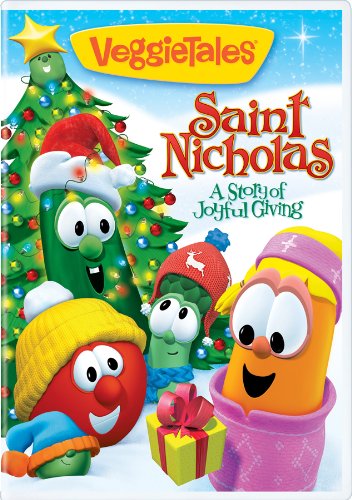
Veggie Tales: Saint Nicholas - Saint Nicholas was a really incredible guy! Not only that, his story is one of the most inspiring stories for us to hear at Christmas. Bob and Larry and the gang do an INCREDIBLE job at telling the story of the life of this humble, generous saint in a way that makes my kids beg to watch it!

Sign and Say: 36 Bible Verses for Children - This book is so much fun! It shows you the sign language (in pictures) for 36 different Bible verses like the ver important "Honor your father and mother." My kids love to grab this and learn how to say the Bible with your hands!
Give Thanks! The World Isn't Going to Hell in a Handbasket

While I was reading a book called Rational Optimist, I read this article about negative news being bad for you and had an epiphany. My increasing pessimism about the world not only makes my life more stressful, but is the exact opposite of reality.
Though the headline will not sell nearly as many newspapers, every meaningful statistic tracked over a long enough time span reveals an amazing fact: the world and the human race is experiencing a constant rise in prosperity, health, morality, and anything else you want to measure. In order to help us all give thanks, I offer you some of the statistical hope that I found.
Artificial Light
One of the things that enables us to develop, grow and improve our lot in general is the ability to continue to do work (or leisure-work like reading a book) even after the sun has gone down. Tracking the cost of that work in meaningful terms represents how able we are to develop at our own pace rather than the one dictated by the sun. Check out this dramatic improvement in the cost of artificial light in terms of work time at the average wage:
- A CFL Today: 0.5 seconds of work
- Filament in 1950: 8 seconds
- Kerosine Lamp in 1880s: 15 minutes
- Tallow candle in 1800s: 6 hours
- 1750 BCE: 50 hours
Poverty
It may seem a little ridiculous to spend all that time on light when people are suffering in real, oppressive poverty. The key poverty measure for me is the extreme poverty that threatens someone's existence. That poverty (measured in terms of a dollar/day in 1985) is also on the decline.
- 1950s 36% of the world's population was in extreme poverty
- Today: less than half - less than 18% are in extreme poverty
- At the current rate of decline, there will be no extreme poverty in 2035!
The American Poverty Line
My own country (the United States of America) sets an income amount below which a person is considered "below the poverty line" and in need of assistance. The lot of that group has been improving until today they have more than food, water, and shelter.
- 99% of those below the poverty line in the USA have electricity, running water, flush toilets, and a refrigerator.
- 95% have a television
- 88% have a telephone
- 71% have a car
- 70% have air conditioning
- Rewind to the 1800s, and one of the richest men in history, Cornelius Vanderbilt, had NONE of those things.
Global Hunger
Though the global population has increased from three billion to over seven billion since 1960, we have been able to continue to produce enough food for no one to be hungry (we have a distribution problem that causes hunger). The amazing thing is that if we had not increased our efficiency in that time, we would have needed to begin farming an additional area equal to the continent of South America minus Chile. Instead, our efficiency per acre has increased at a rate that has kept up with demand resiling in no need tot increase the overall acres farmed since the 60s. But what about hunger? Good news there: look at the change in those who are so hungry they may not survive:
- 19% of the world population in 1990
- 12% of the global population in 2010
Health
Since the 1800s, life expectancy has increased six times and the two most at risk groups (Children and Seniors) are the ones who have benefitted the most.
- Infant mortality has dropped by 1/3 since 1950
- Disability rates for those over 65 fell from 27% to 19% since 1982
- Death from stroke (a leading cause among the older population) fell 70% since 1950
Morality
Maybe we are healthier, wealthier, and better fed, but what about the "moral bankruptcy" touted by your local television anchor and newspaper editorial? This is a little more difficult to ascertain as the nuances of morality change over time and people are reluctant to fess up to moral problems in a survey. There is, however, something that is wrong in all cultures and is easily measurable: homicide. Lest you think the ages past before the internet, violent video games, and mega-cities was safer, here is one last statistic:
- Homicide was 10 times more common in the 1600s than it is today
Why is it Improving?
I hope you will not be surprised by my answer: God. The Bible makes it clear that since the moment of the first sin, God has been working to reconcile the world to him and set things right. When Jesus left, he made it clear that a major part of God's plan for this vision of reconciliation is humanity. God is going to use us to bring about his work in the world. The final part of the Bible ends with a brilliant vision of the future with a new Jerusalem descending and the world being transformed into a place where there is "no more death, mourning, crying, or pain." (Rev 21:4b) No matter what the headlines say, we are well on the way to the New Jerusalem and have a lot to be thankful for this year!
Merry X-Mas! Untangling Confusion with Information

Christmas is fast approaching, and it is full of tiny intellectual land mines like this one. For some people, seeing Christmas written as "X-Mas" gets them upset because it "takes the Christ out of Christmas." Now, I'm all about a soapbox about the co-opting of our sacred holidays by marketers selling junk, but about X-mas? I love it!
I love it because it gives me an opportunity to teach. As it turns out, writing X-mas is just as faithful as writing Christmas.
Of course, most of the people you know are fluent in the particular dialect called Koine Greek that the New Testament is written in, but in case you missed that class in high school, let me refresh your memory. The greek word for Christ that is pronounced Christos begins with the greek letter Chi. That first letter eventually came to be used as a common abbreviation for the word and ultimately inspire a host of Christian number stickers and t-shirts when it was added to several other abbreviated titles for Jesus and formed into an anagram that spelled the word fish.
That word, pronounced “ichthus,” is the one that is often written inside that silver fish emblem that Christians put on the back of their cars. Yes, it is kind of odd, and a little redundant, to have the word fish inside a fish symbol, but when you realize that it means more most people overlook the design faux pas. What does it mean? I thought you’d never ask! The letters in the anagram stand for Jesus, Christ, Son of God, Savior with our stout little Chi standing in for “Christ” as usual. What does all of that have to do with X-mas? Everything!
If you had to memorize the greek alphabet you may already be a step ahead of me. The letter Chi in greek looks like the English letter “X.” Which means that you can abbreviate the word Christ by putting the letter “X” in your sermon notes. It also means that the people who began using X-mas were being very responsible as X-mas doesn’t “take the Christ out of Christmas” at all. It just abbreviates Christ with an abbreviation that many of the people complaining about the use of X-mas have stuck to the back of their car.
Lest you think this is a recent development by our secular society to compromise the focus on Christ, the first use of this abbreviation, according to the OED was in 1755. The term continued being used by Lord Byron, Samuel Coleridge and Lewis Carroll.
All of that is to say that Christmas is full of opportunities to question and learn more about faith, and as far as I'm concerned, the only thing that "takes Christ out of Christmas" is when Christians allow themselves to forsake growing closer to God in order to get a 3% discount on all their gifts and hand address all 150 Christmas cards.
To help you out with that, I have wrote a short book several years ago that explores the history, science, and archaeology of angels, Santa, the manger, wise men, and those pesky pagan roots of our holy season. It's short enough to finish by Christmas if you just read in the checkout lines. It's called Investigating Christmas. I hope it helps you grow closer to God this Christmas. It's available on Kindle and in Print on Amazon.
The Small Group You Have Always Wanted
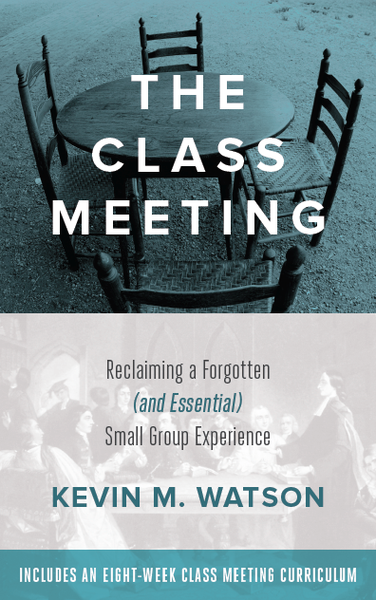
The small group you have been longing for actually started in 1742. It wasn’t strategically designed to appeal to the fact that you like dogs rather than cats, it wasn’t something that had hours of homework each week, and you definitely didn’t spend 30 minutes watching a mega-church pastor on a T.V.. This small group was about transformation through community, and it was called (back in the day) a class meeting.
I cannot tell you how I have hungered for a tool that helped contextualize this brilliantly formative practice in the 21st century. I mean, How hard could that be? The 1700s weren’t that different from today. Wait, that world was a VERY different place. Forget whether or not they had internet or TV. There was no refrigeration, telephones, or light bulbs! Taking a practice from that time and translating it to today takes an incredibly intelligent and culturally-aware individual.
Praise God for Kevin Watson. In his forthcoming book (11/15/2013) The Class Meeting. He does just that. He not only gives an accessible introduction to the story of the Class meeting, but he helps the reader place it in the modern context and envision exactly what it would look like in a suburban den or high-rise apartment.
That alone is worth the cost of the book, but The Class Meeting goes further by seamlessly merging re-imagined history, small group curriculum and a ministry guide into a single new category. The book is not merely about class meetings; it is designed as a launching resource for these types of small groups. That’s right. You put this in the hands of small group members and as they go through the book together they begin practicing a modern version of Wesley’s class meetings!
How appropriate that the first credible book I’ve read about brining the class meeting to today ends up being as practical and innovative as Wesley’s original class meetings were.
If you have seen how quickly people hit the transformation ceiling of curriculum-driven small groups, if you have watched as affinity groups devolve into gossip groups, cliques, or into extinction, if you have seen the brokenness of the Sunday School model and the oft-hyped and oft-failed modern small group craze, this book is for you.
For those of you involved in Youth Ministry, this book will offer a model for groups that is more than accountability and more than Bible study. It will help you tap into the desire of teens to be heard and understood as well as their need for guidance and partnership. Though it will require some teenization, it will be well worth it!
If you haven’t already left to purchase it, what are you waiting for? Go get it now!
Ministry is Not Marketing

The Iconic iPod Ad
“At the end of the hospital service, we can pass out a brochure about the church.” I will never forget that moment. It was one of my first ministry jobs, and after discussing offering a worship service for people whose loved ones were in the local hospital, the conversation turned to marketing.
I will never forget it because it was the first time my skepticism was let out of its box in a church meeting. I was obviously shocked or irritated or some combination of both because someone asked me what I was thinking. With as much calm as I could muster, I said, “Don’t you think people would be offended if we tried to push our church services on them in such a difficult moment?”
My irritation was matched only by their bafflement about my comment. I had come in a little late to the meeting as college students do from time to time, and had missed the beginning of the discussion. They informed me that they were discussing ideas for how to get more people to attend the church, and had already talked about bumper stickers, a chili cook off, and now were zeroing in on an opportunity that had just come available because the rival church in town had stopped providing Sunday services at the hospital.
I totally understand how getting a really solid bowl of chili would make someone want to come to Jesus and what person hasn’t followed someone with a bumper sticker that said “Follow me to _____.” But something felt wrong about using ministry to hurting people as a marketing tool.
The reason it’s wrong is that it betrays the core purpose of worship — healing, and restoration. Worship is an opportunity which seeks to connect people with the power of the living God in order to place their souls and lives back in order. These are intimate, delicate things. They are tender moments of privilege in which God allows his people to be the conduits through which his grace is communicated. THAT is how they are to be used.
Co-opting spiritual things to make yourself or your organization look good is nothing new. In fact Jesus felt it important to give some specific instruction on that. When talking about giving to the needy, praying and fasting, he repeated phrases like, “Then your Father, who sees what is done in secret, will reward you” (Matthew 6:4b)
I can’t tell you how many people I have known over the years who have been disgusted by Christians who use devastating times or holy moments to advertise. Which brings us to the point I’ve been circling for this entire time: Apple iPod advertisements.
Apple had an incredibly successful and famous advertising campaign several years ago that featured silhouettes dancing on video or billboard. There was no talk of features, no litany of why they were better than everyone else. It was just music, a silhouette and the gleaming white iPod and earbuds in the silhouette’s hand.
They had so much confidence in their product that they said nothing. They showed the product and left you to come try it out yourself. They didn’t even tell you where it was available for sale.
Jesus said, “And I, when I am lifted up from the earth, will draw all people to myself” (John 12:32).
The most disappointing thing about the hospital idea was that serving those people anonymously, caring for their souls and wiping their tears was great advertisement. It was great because it was lifting Jesus up.
Maybe those people would come to church next Sunday, but if not maybe they would come to Jesus knowing that in their time of need he sent someone to be there.
Why Science Causes People to Leave the Faith (and how to fix it)

“I Just don’t know if I can believe anymore.” It’s a phrase I have heard in my office far too many times. And when it is a person who has not recently experienced a tragedy, the source of their lack of confidence in their beliefs is often Science.
Whether they had a teacher contradict something they believed to be a key tenant of Christianity, or just watched some Discovery or History channel special, somehow the discoveries of Science has challenged (or ruled out the possibility altogether of) their belief in God.
Some will tell you the solution is to wage an all out war against Science. Pull your kids out of school, make them teach religious principles in the classroom, and disprove (using things very close to science) anything that even hints at disputing a religious belief. This response will not only exacerbate the problem, it totally misunderstands the REAL issue here.
On the surface, you might think that the problem is that Science is challenging the truths of Scripture when serious Science never seeks to interact with the spiritual at all. It seeks to collect data, analyze it and make conclusions from it. Disproving God is an aftereffect of offering another option (based on the data collected) of how something occurred.
Which forces a choice: either our Biblical explanation of an event is correct and God is real or Science is correct and God is not real right? Wrong. There is a third option: we have poor theology. I think that is, more often than not, the case.
For too long, we have explained our faith’s relationship to science using a HORRIBLE method known as the God of the gaps. Basically, wherever Science comes up with nothing, we interject God.
Before we understood how our immune system fought a common virus, every time a person recovered from one it was attributed to God.
Before we understood the gravitational force that holds our solar system together, the answer was: God held it together.
Before we understood how plate tectonics worked, earthquakes and tidal waves were God’s judgement.
The problem with all of this is that when science fills in one of the gaps and explains something that was attributed to God, God seems less credible and less powerful.
Fast forward to when I was a child. The Scientific idea that was rocking our spiritual world was the idea of the Big Bang. Up until that point, even those who ascribed to evolution had no real explanation for how the universe was created, and God was the answer.
I remember talking to a pastor about the Big Bang and saying, “If the universe was created by the Big Bang, where was God?” One of my gaps had been filled in thus making God seem a little less. His reply? “Well, maybe the universe was created by the Big Bang, but what made the Big Bang?” Another Gap, and another place for God to live. Until…
You’ve guessed it. There is a plausible explanation now for how the Big Bang happened, and our bad theology has once again allowed God to be unseated by Science.
What’s the solution? Pretty simple: stop using the God of the gaps and start using science. Start using science? That’s right. Check out Romans 1:20: “For since the creation of the world God’s invisible qualities—his eternal power and divine nature—have been clearly seen, being understood from what has been made, so that people are without excuse.”
God created the universe and created it to tell us about who he is. That means when we (Scientists) study the world and come to a greater understanding of it, we are further clarifying God’s message about who he is. That means Science is an intensely spiritual undertaking for those who believe in Jesus.
When the findings of Science become another tool for us to better understand God, we can take God out of the gaps and place him where he belongs: as ruler over all. We stop making enemies out of the geniuses that are studying God’s creation, and we allow our people to believe without feeing they have to reject Science.
>>>Read More: 5 Simple Ways to Keep Skeptics out of the Church
How David Really Beat Goliath (Malcolm Gladwell)

My bet is that this publisher’s description will make you run to Amazon and buy David and Goliath by Malcolm Gladwell:
Three thousand years ago on a battlefield in ancient Palestine, a shepherd boy felled a mighty warrior with nothing more than a stone and a sling, and ever since then the names of David and Goliath have stood for battles between underdogs and giants. David's victory was improbable and miraculous. He shouldn't have won.
Or should he have?
In David and Goliath, Malcolm Gladwell challenges how we think about obstacles and disadvantages, offering a new interpretation of what it means to be discriminated against, or cope with a disability, or lose a parent, or attend a mediocre school, or suffer from any number of other apparent setbacks.
Here’s the skinny on what’s in the Book: Brilliance. Hang on, this is supposed to be an unbiased summary. Let me start over.
In this soon to be sermon-plagiarized book, Gladwell takes the Epic tale of David and Goliath and uses it as an entry point into a re-imagining of our bias against disadvantage and obstacle.
He delves into the psychology behind the reason that those who are in the middle and bottom-third of Harvard’s Economics School publish about the same, on average, as students at that level at far less prestigious schools.
He looks at the reason behind the fact that a disproportionate percentage of top performing CEOs and innovators have dyslexia. He even tackles the problems created by California’s three-strike law.
He does all of this by exploring the story of people involved in each of these unique and perplexing situations. Those stories are divided into three parts that represent the three main concepts he is putting forward: The advantages of disadvantages (and the reverse), desirable disability, and limits of power.
The advantages of disadvantages explores the question of why we are so surprised when the underdog wins. It happens all the time. David beating Goliath is one of many similar stories we all can tell. It turns out that being smaller, having less money, or being less skilled is not necessarily a disadvantage. Often those things end up giving the apparently weak an advantage over the strong.
In part two, “Desirable Difficulties”, Gladwell makes the argument that the skills people develop to compensate for significant difficulties (like dyslexia) often end up being powerful tools that enable them to accomplish more than the average person who did not have to overcome that difficulty. While no one who had overcome whatever it was would ever desire someone else to have their difficulty, having it is what allowed them to be who they are, and in that sense is desirable.
The final part explores the limits of power. By that Gladwell means that there is a point at which any system of power begins to see dramatically diminishing returns to the point of working against the powerful. At some point more power becomes a disadvantage.
He comes to the conclusion that the powerful are never as powerful as they seem nor the weak as weak. And, in many situations the surprising advantages of those who are initially seen as weak ensure their ultimate success.
I am sure you can tell where I fall on the sentiment scale in regards to this book. Malcolm Gladwell is an incredible author that consistently turns out interesting works that both intrigue and surprise by tying together interesting research from disparate fields into a cohesive argument.
But the brilliance of this work is setting this entire story within the Biblical narrative even starting each part with Bible verses. In fact, you may never read an exegesis of the David and Goliath story as good as the one in the first chapter, which alone is worth the price of the book.
However the insight into the human psyche and systems of success make this a must read for everyone, especially Christians.
From Brave Reviews
Six Tools For Taking Your Discussion to the Next Level

The tool you are looking for is Bloom’s taxonomy. It’s not as exciting as a free youth ministry game site, but it is the best tool out there for deepening your discussions.
This tool is the key to taking your discussions to the next level. The basic idea is that there are several levels at which you can process any given idea and the goal is to plunge as deeply as possible with each session. Depending on the developmental level of your students you may be able to skip several steps, but we’ll avoid the developmental psychology rat hole and get to the content you really care about.
Level 1: Knowledge — This is the most basic level of processing questions like “Can you name the…” or “How many…” fill this level of processing.
Level 2: Comprehension — This goes beyond remembering facts to making sure you actually understand the narrative of the story. The questions here are “What was the main idea…” or “Can you write in your own words..”
Level 3: Application — At this level we help students solve new problems using the knowledge the have acquired in a different way. The questions look like “Do you know another instance where…” or “What factors would you change if…”
Level 4: Analysis — Now we get behind the information and look at the underlying motives by breaking info apart and looking at relationships between them. The questions we use to process this level look like “How was this similar to…” or “What are some of the motives behind…”
Level 5: Synthesis — This combines the information together by combining elements in new ways and proposing alternate solutions. The questions here are “If you had access to unlimited resources, how would you deal with…” or “What would happen if…”
Level 6: Evaluation — At this point the goal is to make judgements between options and defend what you believe. At this moment we ask “Is there a better solution to…” or “Do you think… is a good or bad thing?”
You’re welcome. Go talk about stuff.
Via YWM
>>>Read More: Asking Questions Students will Answer
If Jesus Came Back, Would There be a Scandal?

I’m not sure that many churches would like Jesus if he came back right now, especially if he acted the same way he did in the Bible. I know that may not be something I’m supposed to say as a pastor, but I know that I would struggle with some of what went down.
Can you imagine what people would say if the events in the New Testament repeated themselves today?
You know the moments I’m talking about. There is the time when Jesus was at a party where people were getting drunk and instead of guilting the host for asking for more wine, he made the best wine anyone had ever tasted out of water.
Then there’s another time when Jesus goes to the heathen area just on the other side of the border and tells a lady with a sketchy past that even her people who worshipped in the wrong way at the wrong place were allowed to follow him.
And don’t get me started on the incident at the church potluck. Right there in the middle of everything a prostitute walks in, as if it was the most normal thing in the world for a prostitute to be there, and pours perfume on Jesus feet. If that wasn’t bad enough, she dries his feet with her hair!
But the thing that takes the cake is the moment when Jesus made a scene in the middle of church.
Now, granted, they had a wall in the church that said any non-member who passed it would be responsible for their resulting death. And there may have been one or two formerly upstanding church members that had made a nice living out of overcharging for sacrificial lambs, but what Jesus did would uncurl even the most hairspraied church lady’s Sunday morning do.
Jesus busts in there like he owns the place and starts quoting scripture about God’s house being a house of prayer for all nations and dropping allusions to a time when God destroyed a church like theirs. Then, he picks up a whip and drives the less-than-honest church treasurers out of the church!
I don’t know about you, but I don’t know may churches who would be ok with a minister who gave wine to drunk people, hung out with with people of other religions, aired the church secrets of the rich members in the middle of worship, and brought prostitutes to the potluck.
But the scandal of all scandals was the reason behind these beautifully offensive actions. Jesus honestly wanted everyone to follow God: rich and poor, Jews and gentiles, priests and prostitutes.
I wish I knew more churches and church people who acted like Jesus, and by that I mean that I wish that I acted more like Jesus. Far too often I act like one of the religious leaders Jesus criticizes.
I guess what I’m saying is that despite having “Reverend” in front of my name I am broken and off-track. Which is good news because Jesus loves broken and off-track people.
He looks at us and says, “Come just as you are” because Jesus really, truly wants everyone. Even me. Even you.
From: Al.com
>>> Read More: Forbidden Stories about Jesus You have to Read
Nostradamus vs. Revelation

One of the repeating sensational topics for “histotainment” channels like the History Channel to air are programs about prophecy and the end of the world. Among those who are non-religious or nominally religious, the prophecies of Nostradamus and how they stack up to the Bible are interesting to say the least. So, how do they stack up? What do they say?
Nostradamus was an intelligent man born into a world that was shifting dramatically due to the discovery and colonization of the new world. The protestant reformation was in full swing. Throughout this period of change there was a surge of interest in divination and prophecy. Nostradamus was also interested in these things, and so he included some extra prophetic bits in an almanac he wrote which ended up being a run-away best seller. With this success under his belt he then began to compose a book of poetic prophecy. After composing his first hundred (he called them a century) stanzas (called quatrains, because they had four lines each), he assembled them in a book, adding an introduction in which he explained that it is his goal to make his predictions a little murky so that they could only be understood after he was gone because he was afraid of what people would do once they interpreted them.
When he published Les Propheties (The Prophecies), it was like he published Harry Potter. It was an amazing hit that propelled him to star-author status. He was eventually brought into the court of Catherine DeMedici, the wife of Henry II, as one of the seers in her divination court.
Nostradamus 101
Before we get into the famous ones, we are going to look at a typical quatrain to discover the common features. Keep in mind that these were originally written in French and have been translated into English by people far more intelligent than I.
Venus Neptune will pursue the undertaking.
You will be thoughtful (masculine) trouble the opponents.
A tumult [trumpet blast] in Adrie a city near the Thames,
The quarter noise wounds the night of the sleeping ones.
(1555 Almanac)
Obvious, right? I hardly can believe anyone would have to explain such clarity! At first glance, you might assume that the first two terms refer to the Roman gods or even the two planets, but the verb that follows the two terms confounds that assumption. That is because the verb is singular. The singular verb implies that there is a singular person, place, or thing that is named Venus Neptune. There is no record of anyone named Venus Neptune which brings us to a dead end with the first line.
The trouble in the second line is not the verb, but that there is something missing. Not just any something, a key something. It could be anything really. The opponents are just as likely to be troubling you as you are them.
The next line speaks of a tumult (think trumpet blast) in a place called Adrie. Some will take Adrie, and say it means Hadrian, and then change Hadrian to Hitler or make it a city or not.
The last line is probably one of the most well written lines. It suggests that at some point someone will be awoken by a loud noise in the night while they are sleeping. That is definitely what happened. In fact, it has happened to me last night when my son slammed the door after getting some water at 2 a.m.
Though it can be fun to be skeptical about this, the trouble here is clear. There are words missing. Word references are unclear. It is, to use Nostradamus word, murky.
Nostradamus and 9/11
Now to a more famous bit. Some say that Nostradamus predicted 9/11. Here are the two quatrains that are said to have predicted this horrific event:
At forty-five degrees shall burn the sky,
Fire to approach the new grand city thence;
Instantly great scattered flames will arise,
When one shall seek the Normans’ evidence.
Garden of the world near the new city,
In the pathway of cavernous mountains,
Seized and plunged into a cauldron shall be,
Forced to drink water that’s sulfur-poisoned.
(VI:97 and X:49)
As you hopefully remember from junior high geography, latitude is measured in degrees. If you get on the web and look up the latitude for ground zero you get 40.7116°, or about 41°. There are many who count this as a miss, but in my book, if Nostradamus was channeling latitudinal coordinates for a world crisis at the distance of several centuries, 4.2884° off seems like as close to a dead on hit as one could hope for.
Moving to the second line, you would have to look hard to find someone who could not imagine “grand” as in the realm of accurate adjectives to describe New York.
The third line could be the most troubling of them all because of the horrific images it brings to the minds of anyone who witnessed the event. I have no idea how a person who had never seen a skyscraper, ridden in an airplane, or traveled to this grand city would describe the image of the planes colliding into the towers, but as a person who has done all of the above, “scattered flames” seems pretty accurate.
The fourth line is totally unclear in regards to this historic event which brings us to line five. There was a large open area in front of the World Trade Center. It’s not necessarily a garden, but one of the most unique aspects of Manhattan is its huge garden.
Those who try and explain the next line about cavernous mountains, suggest that the only thing of this size in Nostradamus’ time were mountains. Unlike mountains, these structures are not solid; rather, they are hollow so that people can work inside them. One might even call them cavernous.
One of the most disturbing images after the disaster was the giant hole that was left when the debris was clear. The World Trade Center was sitting atop a huge parking deck that was carved out of the ground below. In a sense it plunged into that hole which provides the link for “plunged into a cauldron shall be” in line seven. The quatrains end with a bit of a disappointment as no plausible connections have been suggested for the final line.
You can take take these quatrains, and with a little creativity and effort create a pretty “wow” moment. However, before 911 there were a variety of equally plausible interpretations of this passage like it referring to a tidal wave of water infected by chemical warfare.
Prophetic Problems and Biblical Solutions
That brings us to the two main problems with Nostradamus’ prophecies. First, they are unclear. It goes beyond the missing words. There is no real story or narrative that seems to connect the fragments and phrases.
The second problem is that nothing that he has written has ever been proven predictive before an event has actually happened. It is always in the rear-view mirror that people are able to make connections with his quatrains.
It is in this second critique that the connection exists between Revelation and Nostradamus. Revelation has never been shown (beforehand) to predict an event that would happen in the future. There is a whole method of understanding the book of Revelation that shows how all of its prophecies were fulfilled by 70 CE, but even that method of understanding the prophecies was not developed until a couple centuries later.
The most popular way to look at the book of Revelation today says that the majority of the prophecies in the book of Revelation are talking about events that are in the future. This does not, of course, fix our problem as the claims of this interpretive scheme are currently can’t be proved since they haven’t yet happened.
Where Nostradamus and Revelation begin to diverge is when you look at their composition. The book of Revelation has complete sentences and correct grammar. More than that, Revelation has a story. It has a narrative, however odd it may be, that you can follow as the prophet and beast conspire to have the world worship the dragon.
In fact, there is a whole school of thought that believes that the book of Revelation is a work meant to be instructive to the believer now. The unified message of Revelation when seen through this lens of being an instructive epic is one which says that those people who follow after God will be triumphant in the end and will get to spend eternity connecting with God
So What?
Now we get to the biggest question of all: Why does this matter when I wake up tomorrow morning? There is a common message across apocalyptic literature. Nostradamus, the book of Revelation and all of the apocalyptic tales told since our brains were at the point that they could think about the future tell us one story: there will be an end. Just like everything else has its end, there will be an end to the world.
The message (or at least the application) that I think the book of Revelation and Nostradamus share is: The end will come… who do you want to be when it gets here? You can spend your life, money, time, and resources on whatever you choose. You can spend all of your years on something, and one day the end will come for you. Maybe it won’t be at the hands of the antichrist, but it will come as it does for all humanity. Who do you want to be? What do you want to have spent your life on?
The Rev. Jeremy Steele is the Next Generation pastor at Christ United Methodist Church in Mobile, AL and a regular columnist for The United Methodist Reporter
Sources for Nostradamus translation and interpretation:
The Skeptical Inquireer: http://www.csicop.org/si/show/nostradamus_a_new_look_at_an_old_seer/
Newman, Sharan (2010-04-02). The Real History of the End of the World Penguin Group. Kindle Edition.